Dr. Gymbro
←

#gut microbiome

2 articles
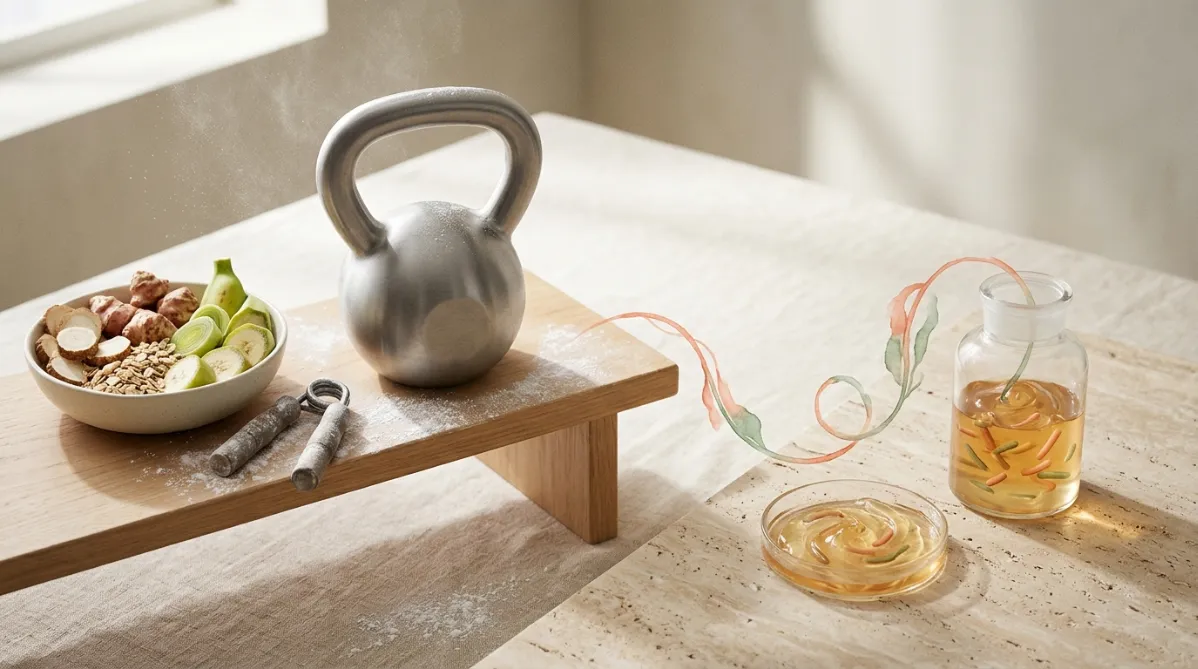
A landscape editorial still life on a soft, warm-neutral background of pale oat linen and light travertine stone. In the center-left, a matte brushed-steel kettlebell and a pair of worn chalk-dusted hand grippers rest on a low pale wooden bench. Beside them sits a shallow ceramic bowl of fermented and fiber-rich foods: sliced chicory root, Jerusalem artichokes, oats, leeks, and a few green banana slices. Soft powdery chalk drifts in the air like fine dust in a sunbeam.

On the right, a minimalist glass apothecary jar and a delicate petri-style glass dish hold a swirl of translucent amber-gold gel with tiny, organic rod-shaped forms. They are rendered as abstract, elegant botanical-looking filaments in soft coral and sage green, like watercolor ink bleeding through water. A single fine thread of this ink-like color curls out of the jar and gently loops across the surface toward the kettlebell, suggesting a quiet connection between gut and muscle without literal anatomy.

Late-morning window light enters from the upper left and casts long, soft shadows with gentle highlights on the metal and glass. Sage green, terracotta, cream, and muted gold make up the palette, with a subtle film-grain finish. The composition is airy, with generous negative space on the far right and top for headline overlay. The shallow depth of field, crisp focus on the foreground objects, and creamy blur behind them give it the polished, modern feel of a wellness and science magazine cover.
science research

Bakteria jelitowa powiązana z większą siłą podnoszenia: Roseburia inulinivorans

BY DR. GYMBRO ·

Jedna bakteria jelitowa, *Roseburia inulinivorans*, została powiązana z lepszym wynikiem w chwytaniu ręką, wyciskaniu nóg i podnoszeniu sztangi. Podanie jej myszy zwiększyło siłę chwytu. Inne gatunki *Roseburia* nie wykazały takiego efektu, a u starszych dorosłych bakteria była mniej liczna niż u młodszych. Dowód przyczynowo‑skuteczny pochodzi wyłącznie z badań na myszach i nie istnieje jeszcze żaden komercyjny probiotyk. Oto, co odkryto w *Gut*, jak może działać oraz prosty, niskiego ryzyka sposób, by wspierać mikrobiom, dopóki nauka nie dostarczy dalszych dowodów.
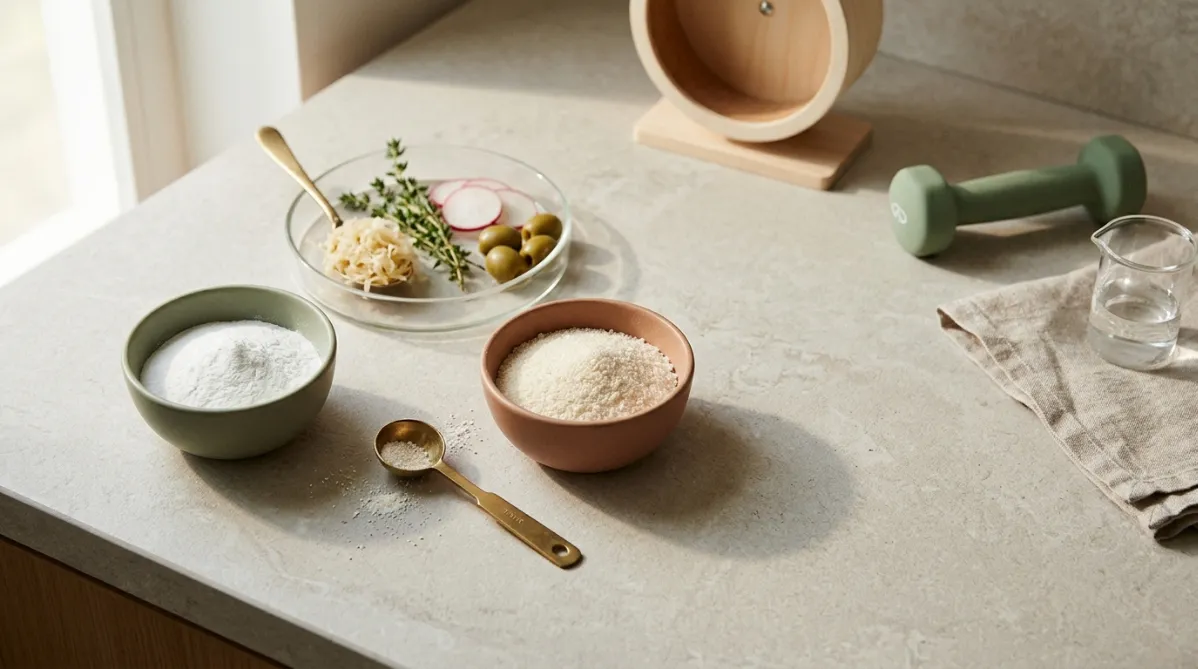
A wide editorial still life on a pale warm-gray stone countertop, lit by soft natural window light from the left. In the center, two small matte ceramic bowls sit side by side. One holds fine white creatine powder, and the other holds a slightly coarser, creamy off-white crystalline powder. Between them, a delicate brass measuring spoon rests at a slight angle, dusted with a few grains. Behind the bowls, a shallow glass dish holds a handful of whole food ingredients that suggest gut health: fermented sauerkraut, a few sprigs of fresh thyme, sliced radishes, and a small cluster of green olives. Their colors are soft and natural. To the right, a minimalist wooden mouse running wheel stands out of focus as a quiet visual nod to the exercise study. Beside it, a small, slim dumbbell in muted sage green rests on the counter. A folded linen napkin in oatmeal tone and a single glass beaker with clear water add a subtle lab-meets-kitchen feel without looking clinical. The palette is calm and modern: sage green, terracotta, cream, soft sand, and touches of warm brass. Shadows are gentle and elongated, with a shallow depth of field that keeps the powders crisp and the background creamy. The composition leaves generous negative space on the right third for title text. The overall mood is clean, thoughtful, and trendy, like a contemporary wellness and science magazine, with fine film-like grain, natural textures, and a refined editorial look.
science research

Związek PAS pochodzący z mikrobioty jelitowej przewyższył kreatynę u myszy — ale jest haczyk

BY DR. GYMBRO ·

Nowe badanie na myszach wykazało, że para cząsteczek pochodzących z mikrobioty jelitowej – kwas pipecylowy i sukcynian (PAS) – przewyższyła monohydrat kreatyny pod względem siły chwytu i siły mięśni po siedmiu tygodniach treningu na obciążonym kole. Zaskoczeniem jest to, że żaden z tych związków nie zwiększył masy mięśni ani wielkości włókien, więc przewaga dotyczyła funkcji, a nie rozmiaru. Oba suplementy poprawiły także wydolność biegową w porównaniu z kontrolą. Należy jednak pamiętać, że wyniki dotyczą wyłącznie myszy i nie ma danych dotyczących dawkowania ani bezpieczeństwa u ludzi.

This page is available in